The Georgian supra: how the table works and what's expected of a guest
A supra isn't dinner. It's a structure with rules — and knowing them in advance changes the whole evening.
Who the tamada is
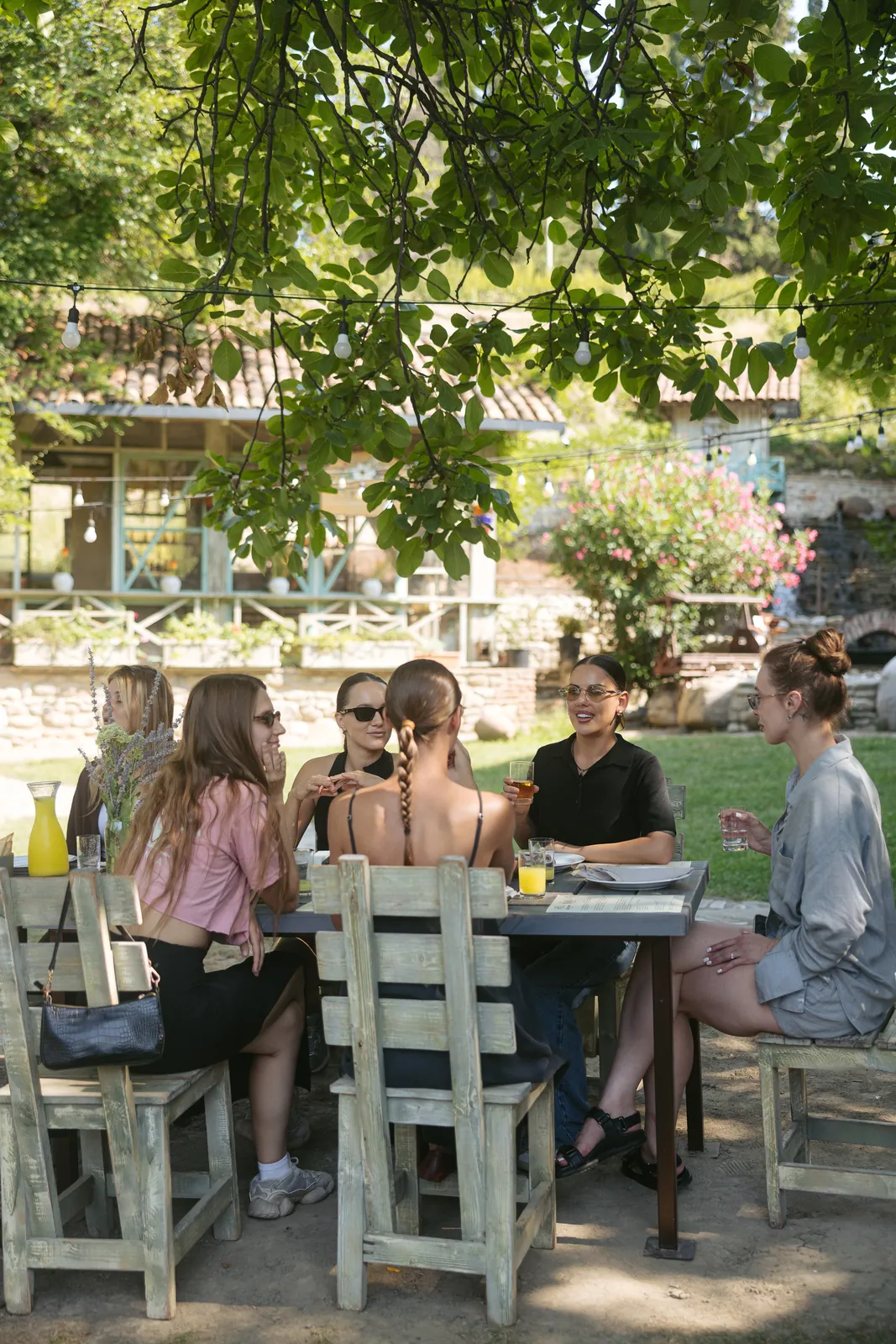
The tamada is not a host and not simply the person making toasts. He holds the shape of the table: he decides when and to what you drink, who speaks, when to move from the solemn to the light. He is chosen, and the choice isn't a formality.
Until the tamada announces a toast, you don't drink. Your glass may sit full for a while — that's normal, nobody is rushing you.
The order of toasts
It isn't rigid, but the logic usually runs: the reason for meeting, then peace, parents, those who have died, children, guests, women, the homeland. After that it loosens.
Do you have to drain the glass
For the main toasts, it's customary. But you can always decline, and it isn't an insult. Say it plainly: driving, not drinking, health. Nobody will press.
Chacha is a separate matter. It comes out towards the end, and three shots of chacha and a glass of wine are very different animals. If in doubt, skip it.
The three most common mistakes
- Making a toast longer than the tamada's. Short and sincere always wins.
- Clearing the plate so as not to offend. The opposite: leaving food is fine. There is deliberately more than anyone can eat.
- Trying to out-drink the host. It isn't a contest, and you won't win.
What to say if you're given the floor
The toast that works best from a guest is specific, not general. Not «to friendship between peoples», but «to the fact that this morning we didn't know each other and tonight we're at one table». One sentence, in your own words. That's enough.
The tamada, and why there is one
The tamada isn't a host or the heaviest drinker. He keeps the rhythm of the evening: he decides when and to what everyone drinks, and he stops the table splitting into separate conversations. Without one, a supra is just dinner.
Toasts follow an order — to peace, to parents, to those who have died, to children, to guests. The toast to the dead is drunk standing and without clinking glasses. That is the one rule worth knowing in advance so you don't get it wrong.
What will be on the table
- Pkhali. Chopped greens or vegetables with walnut. Served cold, eaten first.
- Lobio. Beans, often in a clay pot, with mchadi cornbread.
- Khachapuri. Different in every region. Adjarian is the boat with an egg; Imeretian is round and closed.
- Mtsvadi. Skewers grilled over vine cuttings, arriving mid-evening when everyone thought they were done.
- Churchkhela and sweets. At the very end, when eating is no longer physically possible.
How to behave as a guest
Mostly: don't rush. A supra runs four or five hours, and trying to eat your fill in the first twenty minutes ends the same way for everyone. Take small amounts and leave room.
You don't have to empty your glass on every toast, only the important ones, and the tamada will make those obvious. Declining altogether is fine, but say why once and say it out loud — "I'm driving" or "I can't" is accepted calmly; silent avoidance is not.
And if you were invited as a guest, don't try to pay. It reads as an insult rather than good manners.
Chacha, and when it appears
Chacha is grape spirit, and the homemade version can be very strong. It usually comes out near the end, once the wine is gone — which is precisely the point at which guests overestimate themselves.
The sensible move is to stop at the chacha. The evening is no worse for it and the next day is considerably better.
FAQ
How long does a supra last?
From two hours to indefinitely. You can leave earlier — thank the host and the tamada.
Can I bring my own wine?
You can, but the host will almost certainly pour his own. Bring something else — sweets, fruit.
Do children sit at the table?
Yes, everyone together. There's no separate children's table in the tradition.
Come and see it yourself
Small groups, our own driver, wineries we know. Next departures are on the home page.
See the trips